Virtual assets may lose their value in part or in full, and are subject to extreme volatility at times. You can lose all the money you invest, and you do not benefit from any form of financial protection.
This article is general information, not a recommendation to buy or sell anything. ETTFOS has a commercial interest here: it sells trading education, and its course contents include cryptocurrencies. Academy articles are prepared by the ETTFOS team and other writers. They make no claim of expertise or accuracy, and they are not kept up to date after they are published.
Table of Contents
This article explains what Bitcoin is, what a holder has and where the risks lie. It gives no steps to buy, no exchange names and no forecasts.
What Bitcoin is
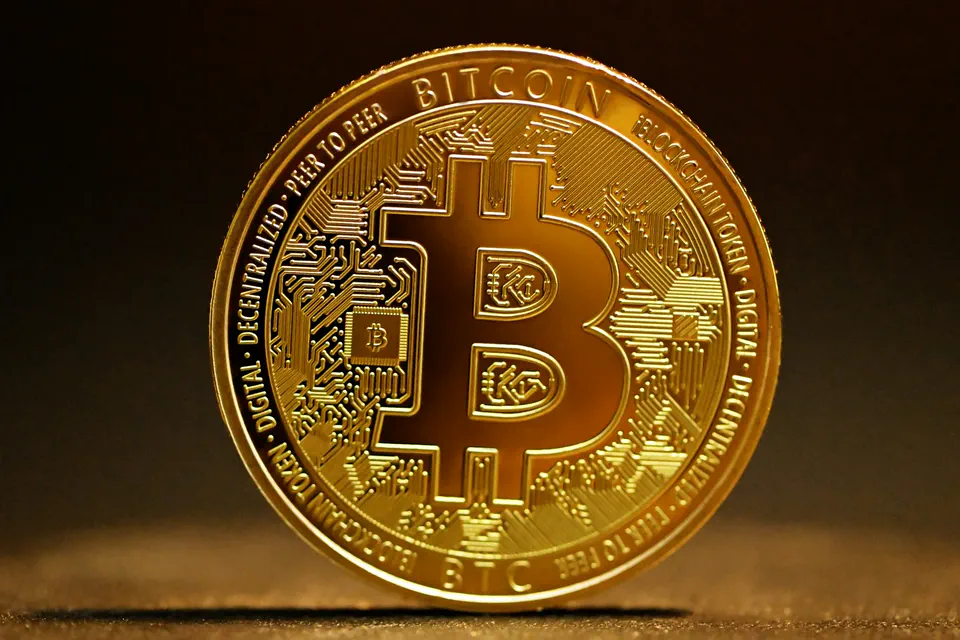
The US Commodity Futures Trading Commission (CFTC) describes Bitcoin as a convertible virtual currency, a digital representation of value. It says virtual currency does not have legal tender status, and that virtual currencies are not currently backed nor supported by any government or central bank.
Bitcoin runs on a blockchain, which the US National Institute of Standards and Technology (NIST) describes as a digital ledger kept in a distributed fashion, usually without a central authority.
Its design limits supply: the Bank of England has described a planned eventual total of 21 million bitcoins. A limit on supply is not a floor under the price. The CFTC says the value of virtual currencies is completely derived by market forces of supply and demand. The UK’s Financial Conduct Authority (FCA) says of unbacked crypto: “If people stop buying, the price could fall dramatically.”
What you would own
Unbacked crypto, the FCA says, has no tangible assets behind it. What you would have depends on how you hold it.
- In your own digital wallet, you keep the private key, which Canada’s securities regulators liken to a password. If you lose it, NIST says, any digital asset associated with it is lost; if it is stolen, the attacker has full access. European supervisors call such a loss permanent and irreversible.
- On a trading platform, the platform typically holds the private key. According to the blockchain, those regulators say, the platform, not the client, is the owner of the crypto asset. The client has a contract giving a right to have it delivered.
Two common assumptions do not hold:
- Bitcoin is not simply anonymous. The US Federal Trade Commission (FTC) says cryptocurrency transactions will typically be recorded on a public ledger. For Bitcoin, NIST says, all transactions are publicly visible.
- A payment is not easily reversed. The FTC says cryptocurrency payments typically are not reversible: you can usually only get your money back if the person you paid sends it back.
How people hold it
Canada’s securities regulators describe the trade-offs.
- Hot wallet: runs on a connected device. Assets can be conveniently traded, but the risk rises that the device is hacked and the assets stolen.
- Cold wallet: not connected to the internet, with fewer opportunities for hacking, but at risk of physical loss, damage or a lost seed phrase.
- Trading platform: you trust it to deliver the asset when requested, and to keep operating and protect against hacking and theft.
In February 2025 the FBI said North Korea was responsible for the theft of approximately $1.5 billion in virtual assets from one cryptocurrency exchange.
Some people get exposure through exchange-traded products, where those are offered. When the US Securities and Exchange Commission (SEC) approved certain spot bitcoin products in January 2024, its chair at the time said: “we did not approve or endorse bitcoin.” He added: “Investors should remain cautious about the myriad risks associated with bitcoin and products whose value is tied to crypto.”
In Dubai, outside the Dubai International Financial Centre, the Virtual Assets Regulatory Authority (VARA) says only entities it has licensed are authorized to provide virtual asset services. Its public register shows who is fully licensed and who holds only an In-Principle Approval, which does not allow a provider to operate or serve clients.
The risks regulators and researchers describe
- Volatility. An article in the European Central Bank’s Financial Stability Review of May 2025 says that in 2024 Bitcoin prices were twice as volatile as gold prices and nearly three times as volatile as the S&P 500. It calls Bitcoin a highly volatile and speculative investment.
- Limited diversification. The same article says Bitcoin has shown limited portfolio diversification benefits for equity portfolios.
- Losses. BIS researchers found, on data from August 2015 to December 2022, that a majority of crypto app users in nearly all economies made losses on their bitcoin holdings.
- Theft. The CFTC says there is no assurance of recourse if your virtual currency is stolen.
How scams usually look
The FBI reports that cryptocurrency investment fraud was the highest source of financial losses to Americans in 2025, with $7.2 billion reported in losses. Often, it says, victims are introduced to groups presenting themselves as knowledgeable industry insiders, then sent to fake investment platforms or apps and shown fake profits.
The CFTC says: “If someone tells you there is no risk of losing money, do not invest.”
Where this sits at ETTFOS
ETTFOS is not an investment advisory service or a broker-dealer, and it does not tell anyone what to buy or sell.
Cryptocurrencies are among the products listed in Module 2 of ETTFOS Quantum Leap, alongside futures, forex, stocks and options.
This article does not cover tax. For that, ask a qualified adviser.